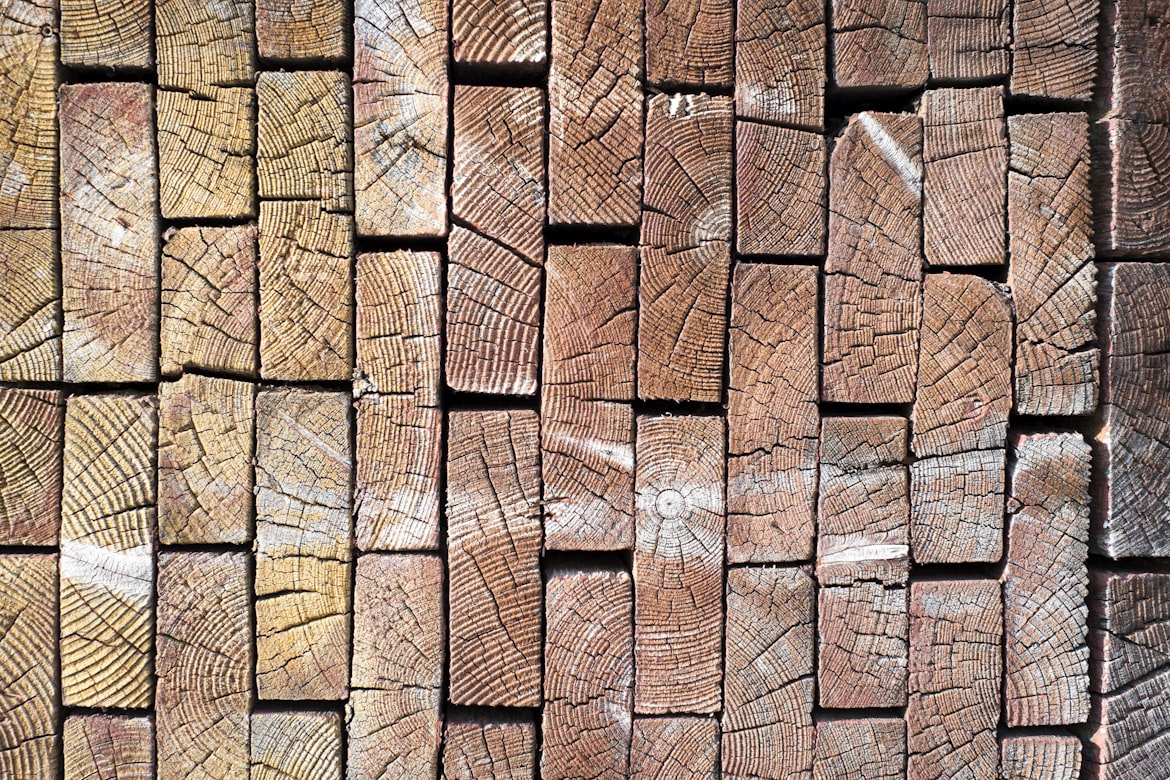
Structural timber forms the backbone of countless buildings, from homes and decks to commercial frameworks. It is the quiet workhorse that holds things up, yet many DIY builders and even experienced tradespeople misunderstand how it truly works. Thickness alone does not guarantee strength, and appearance does not equal performance.
This guide explains structural timber in plain, practical language. You will learn how loads travel through timber, how grades affect performance, where mistakes happen most often, and the practical approaches builders use on real job sites. Think of it as the conversation you would have with a knowledgeable builder, not a dry engineering textbook.
Important: This estimator provides approximate calculations for planning purposes only. Structural requirements depend on your specific design, local building codes, and site conditions. Always consult a qualified structural engineer or building professional before finalizing structural plans.
Structural timber is not just "wood used in construction." It is wood that has been selected, graded, and installed specifically to carry loads, resist forces, and maintain integrity over time. When used correctly, timber structures can last generations—quietly doing their job for a century or more. When misunderstood, they fail silently and expensively, often showing subtle warning signs long before a serious failure.
What Is Structural Timber?
Structural timber is any wood product used in a building or structure where it must safely support weight or resist forces. It's the skeleton that keeps everything standing. These forces include:
- Vertical loads (dead loads from the structure's own weight and live loads from people, furniture, snow)
- Lateral loads (wind pushing against walls, ground movement, seismic forces in certain regions)
- Shear forces (where connected members try to slide past each other)
- Bending and compression stresses (beams sagging, posts being squeezed)
Unlike decorative or non-load-bearing timber—the stuff you'd use for cladding, trim, or shelving—structural timber is chosen based on predictable strength and performance. Each piece is expected to behave within known limits when stressed. There's a margin of safety built into the grading system, but that margin assumes you'll use the timber correctly and in the right conditions. It's not a free pass to push the limits.
Examples of structural timber components include:
- Wall studs (the vertical framing members hidden behind drywall)
- Floor joists (the horizontal members that stop your floor from feeling bouncy)
- Roof rafters and trusses
- Beams and lintels (headers over windows and doors)
- Posts and columns (point loads transferred vertically)
- Deck framing (joists, bearers, posts)
Here's a simple rule of thumb: if a timber component contributes to keeping a structure standing, it is structural—regardless of size or visibility. Even a small timber wedge driven tightly between two framing members can be structural if it's transferring load.
How Loads Travel Through Structural Timber
Understanding load paths is essential to understanding structural timber. Loads do not disappear—they move through the structure until they hit the ground. Miss one link in the chain and problems cascade downward. It's a bit like water flowing downhill; if you block its path, it finds another way, sometimes with destructive results.
In a typical structure:
- Roof loads (snow, wind, the weight of tiles) transfer to rafters or trusses
- Rafters transfer loads to beams or wall top plates
- Walls transfer loads to floor systems via studs and bottom plates
- Floors transfer loads to foundations through posts or bearing walls
Each timber element must be strong enough to carry the load passed to it. Failure at any point breaks the chain and compromises the entire structure. I've seen situations where a beautifully sized beam was placed on an undersized post—the beam was fine, but the post slowly crushed under the load it received. The whole assembly was only as strong as its weakest component, which is an easy thing to overlook when you're focused on one part of the build.
This is why structural timber selection is about system performance, not individual boards. A 2x10 joist is only as effective as its connections, bearing points, and the foundation beneath it. A strong joist on a sagging bearer doesn't do much good.
| Component Type | Typical Timber | Load Type | Critical Factors |
|---|---|---|---|
| Beams and Joists | Douglas Fir, Pine | Bending, Shear | Depth, Grade, Span |
| Columns and Posts | Oak, Treated Pine | Compression | Cross-section, Straightness |
| Rafters and Trusses | Spruce, Fir | Tension, Compression | Connections, Grade |
| Wall Studs | Pine, Spruce | Compression, Lateral | Spacing, Straightness |
| Deck Framing | Pressure-Treated Pine | Bending, Shear | Treatment, Moisture |
Structural Timber vs Non-Structural Timber
One of the most common construction errors is using non-structural timber where structural timber is required. I've seen it happen with fence posts, pergola beams, and even in small deck repairs—someone grabs whatever looks sturdy from the hardware store without checking the grade stamp. It's an honest mistake, but it can lead to real headaches.
Structural Timber Characteristics
- Graded for strength (look for stamps, ink marks, or documentation)
- Consistent dimensions from piece to piece
- Limited defects—knots are smaller, grain is straighter
- Predictable performance under load
Non-Structural Timber Characteristics
- Chosen for appearance—nice grain, interesting character marks
- May contain large knots or defects that are fine visually but weak structurally
- No guaranteed load capacity—you're guessing, essentially
- Used for trim, cladding, shelving, decorative beams
A thick decorative beam may look strong but perform poorly under load. The large knot that gives it character could be a failure point in bending. Structural performance is invisible—and that is where mistakes happen. Even experienced DIYers sometimes confuse a nice-looking piece of oak with a graded structural hardwood. It's a classic case of looks being deceiving.
For a deeper look at how timber is sorted and classified, see our guide on timber grades explained.
Structural Timber Grades (Plain Language)
Structural timber is graded to ensure safety and consistency. Grades indicate how much load the timber can carry and how it behaves under stress—but the system can feel confusing if you're not familiar with the terminology. It's a bit like learning a new language at first.
Why Grading Exists
No two trees are identical. Even within the same species, one board might have tight, straight grain while another has wandering grain and a cluster of knots. Grading standardizes natural variation so builders can design safely without testing every board. It's a system of trust backed by decades of engineering data, and it's what allows us to pick up a piece of timber and have a pretty good idea of what it can handle.
What Grading Accounts For
- Knot size and placement (edge knots are often worse than center knots)
- Grain direction (sloping grain reduces strength significantly)
- Cracks and splits (especially at board ends)
- Density and stiffness (the wood's natural resistance to bending)
- Warp and twist (a twisted stud pulls the wall out of alignment)
If you're curious about how timber compares across species and grades, our timber strength comparison resource breaks down the numbers in practical terms.
Hardwood and Softwood in Structural Use
Both hardwoods and softwoods can be structural, but they are used differently—and knowing when to choose one over the other can save a lot of money and effort. It's not simply a case of hardwood being "better."
Softwood Structural Timber
Softwoods such as pine, spruce, and fir dominate modern structural construction. They are:
- Lightweight (easier to handle, fewer workers needed)
- Predictable when graded (consistent performance data exists)
- Cost-effective (typically much cheaper than hardwoods)
- Easy to cut and fasten (standard tools work fine)
Most framing timber is softwood. If you're building stud walls, floor joists, or roof trusses, you're almost certainly working with softwood.
Hardwood Structural Timber
Hardwoods like oak and beech offer exceptional strength but are heavier, harder to work with, and more expensive. They are often used in:
- Exposed beams (where appearance matters alongside strength)
- Restoration projects (matching existing traditional materials)
- Heavy-load columns (where cross-section space is limited)
Hardwoods are rarely overkill—but they are often unnecessary. Choosing oak for hidden framing that could be done in graded pine is an expensive decision that usually doesn't improve safety.
Our hardwood vs softwood guide explores this in more detail.
Moisture Content and Structural Stability
Moisture content directly affects strength, movement, and durability. This isn't a minor detail—it's one of the main reasons timber structures develop problems over time. Wood is a natural material that constantly interacts with the air around it, expanding and contracting like a slow, silent breath.
- Wet timber shrinks as it dries—gaps open up around connections
- Dry timber expands with humidity—floors can buckle in summer
- Uneven moisture causes warping—one side of a beam dries faster than the other
Structural timber is usually supplied kiln-dried to controlled moisture levels, often around 12-15% in many regions. Installing wet, unseasoned timber structurally can lead to:
- Shrinkage gaps that weaken nailed connections
- Fastener loosening as wood fibers pull away from screws and bolts
- Cracking and twisting that changes load paths unexpectedly
Acclimation on site is a practical approach that many builders follow, even for structural timber. Letting timber sit for a few days to adjust to local humidity can prevent a surprising number of future headaches. It's one of those simple steps that's easy to skip when you're in a hurry. For a more detailed look, see our article on timber moisture content explained.
DIY Scenario: Shed Framing Failure
A DIY builder framed a shed using untreated, non-graded timber bought cheaply from a clearance sale. Within one year, roof sagging appeared. Investigation revealed internal knots at stress points and moisture-related shrinkage that had pulled framing connections apart.
The fix required dismantling and rebuilding using graded structural timber. The initial savings cost triple in repairs—and this is a common story, not a rare exception. Buying cheap timber for structural work often means buying the same project twice. The frustration of redoing work is far worse than the sting of paying for the right material the first time.
Scenario: Timber Frame Optimization
A builder designing a timber-frame extension used higher-grade beams only at load transfer points. Secondary members used standard-grade timber.
Result: structural compliance, material savings, and faster installation. The project passed inspection without issues and the material bill came in under budget.
Experienced builders tend to design for performance—not excess. Knowing where to spend on higher grades and where standard grades work perfectly is a skill developed over time, on the job.
Common Structural Timber Mistakes
After reading through project forums and talking with builders, some mistakes come up again and again. They're easy to make if you're not thinking about the whole structural system. A lot of them boil down to focusing on one piece of the puzzle and forgetting how it connects to the rest.
Critical Errors to Avoid
- Assuming thickness equals strength: A thick, low-grade board can be weaker than a thinner, high-grade one.
- Ignoring grading stamps: If there's no stamp, there's no guarantee—you're relying on luck.
- Cutting away critical sections: Notching the bottom of a joist for a pipe creates a stress concentration exactly where tension forces are highest.
- Using wrong fasteners: Deck screws are not structural connectors. Nails and structural screws have specific shear ratings.
- Poor load distribution: Point loads need to land on bearing—a post floating on a plywood subfloor is asking for trouble.
Hidden Risks When Structural Timber Is Misused
Potential Consequences
- Progressive sagging: A beam that deflects a little this year may deflect more next year as fibers slowly crush.
- Fastener withdrawal: Nails and screws slowly backing out as timber shrinks and expands with the seasons.
- Structural creep: Timber under constant load gradually deforming over months and years—barely noticeable until it's not.
- Inspection failure: Building inspectors can spot ungraded timber quickly—rework gets expensive.
- Insurance rejection: If a failure traces back to improper material selection, claims can be denied.
Structural failures rarely happen suddenly. They develop quietly—a subtle crack here, a slight sag there. By the time they're visible, the underlying problem has been growing for a while. That's what makes it so important to get things right from the start.
Tips and Hacks
These aren't official engineering standards, but they're practical strategies that many experienced builders tend to follow. They come from seeing what works—and what doesn't—across many projects. Think of them as shop-floor wisdom.
Practical Strategies
- Design for worst-case loads: A roof should handle the heaviest snow you might see, not the average. Materials are cheaper than rebuilding.
- Keep structural cuts minimal: Every notch, drill hole, and notch reduces cross-section. Think before you cut—there's no undo button.
- Double members instead of oversizing: Two 2x8s nailed together often perform better than one 4x8—and they're easier to handle on site.
- Respect grain direction: Wood is strong along the grain, weak across it. A beam sawn with sloping grain near the edge can split under load.
- Store timber flat and supported: Leaning boards against a wall for weeks invites warping. Keep them stacked, stickered, and covered.
If you're planning a project, our guide on storing timber correctly covers practical ways to keep your material in good shape before installation.
Preventive Checklist
Essential Checks for Every Project
Run through these before you cut or install anything structural. Catching issues early is far easier than fixing them later, and it takes a lot less time than you'd think.
- Verify grading stamps—no stamp, no structural use
- Check moisture content—especially important if timber was stored outdoors
- Inspect for hidden defects—look at end grain, check for internal checks
- Use correct fasteners—structural screws or nails, not general-purpose hardware
- Distribute loads evenly—posts should land on beams, beams on posts, all the way down
- Follow spacing guidelines—over-spacing floor joists creates bouncy floors that annoy occupants for decades
Structural Timber Load and Quantity Estimator
After understanding how structural timber works, use this estimator to plan safely. Remember: this provides a rough starting point—always confirm with local building codes.
Frequently Asked Questions About Structural Timber
No. Only timber that's been graded and marked for load-bearing use should be used structurally. Non-graded or appearance-grade timber lacks the predictable strength properties needed—you simply don't know what it can handle. Always look for grading stamps or certification from recognized agencies when buying. If you can't find a stamp and you're doing anything structural, it's worth finding a different supplier rather than hoping for the best.
Not at all. Grade, grain direction, and defects matter as much as size. A smaller, higher-grade timber member can often carry more load than a larger, lower-grade one. The relationship isn't linear—doubling the thickness doesn't necessarily double the strength, especially if the larger piece has a big knot right where the bending stress is highest. This trips up a lot of people who assume "bigger equals better." It's a natural assumption, but wood doesn't always work that way.
Only within strict limits, and many people overestimate what's allowed. Excessive notching weakens members significantly. As a general rule, notches should be limited to the top third of the member's depth, no deeper than one-sixth of the depth, and located away from points of maximum stress (which usually means away from the middle of a beam). Always check your local building codes or talk to an engineer before notching structural timber—improper notching is a common cause of structural problems down the line, and it's one of those things that's much easier to avoid than to fix.
Properly selected, installed, and maintained structural timber can last for centuries. There are timber-framed buildings in Europe and Asia that are 500+ years old and still standing. Lifespan depends heavily on factors like species, treatment, environmental conditions, moisture protection, and load conditions. In well-maintained structures with proper moisture control, structural timber regularly exceeds 100 years. The key variable is moisture—keep timber dry and protected, and longevity tends to follow. It's really about managing the environment around the wood.
Engineered wood products—like LVL, glulam, and I-joists—often offer advantages in consistency, strength predictability, and dimensional stability. They're less prone to warping or splitting and can be manufactured to precise specifications. For many modern structural applications, engineered wood provides excellent performance. That said, solid timber remains perfectly suitable for traditional framing and aesthetic applications. It really depends on what you're building and what's available locally. Neither is universally "better"—they're different tools for different jobs. Read more in our overview of engineered timber.
Conclusion
Understanding structural timber is essential for anyone involved in building or renovating—even if you're hiring professionals and just want to understand what they're doing. It's not about choosing wood that looks strong; it's about selecting material with proven performance characteristics that match specific load requirements. By respecting timber grades, understanding how loads travel through a structure, and following practical approaches that have worked for many builders, you can create safe, durable structures that stand the test of time while keeping material use and costs reasonable.
Building well with timber is mostly about getting the basics right—the right material in the right place, properly connected, and protected from moisture. Everything else follows from that.
About NiceTimber Editorial Team
This article was researched, written, and reviewed by the NiceTimber Editorial Team. Our team creates educational resources covering timber, lumber, woodworking, construction materials, pricing, and wood maintenance. Every article is written to be clear, practical, and as accurate as possible based on publicly available industry information. We review our articles periodically to keep them up to date as industry standards and best practices evolve.